
Ayurveda 101
Helpful Links & Recipes
Ayurveda 101 Presentation - The Knowledge of Life

Click on the link above for a concise introductory presentation on Ayurveda covering its history, core principles, and practical applications. Topics include the three doshas (Vata, Pitta, Kapha), the five elements, diagnostics and daily routines, seasonal recommendations, and basic dietary and lifestyle guidelines. This is a great overview for beginners, emphasizing personalized wellness, how to balance your unique mind-body constitution, and safe, accessible steps to incorporate Ayurvedic habits into modern life.
Keep scrolling for a quick self-assessment quiz, books and recipes to keep you going on your Ayurvedic journey.











Recipes
Gut-Healing CCF Tea
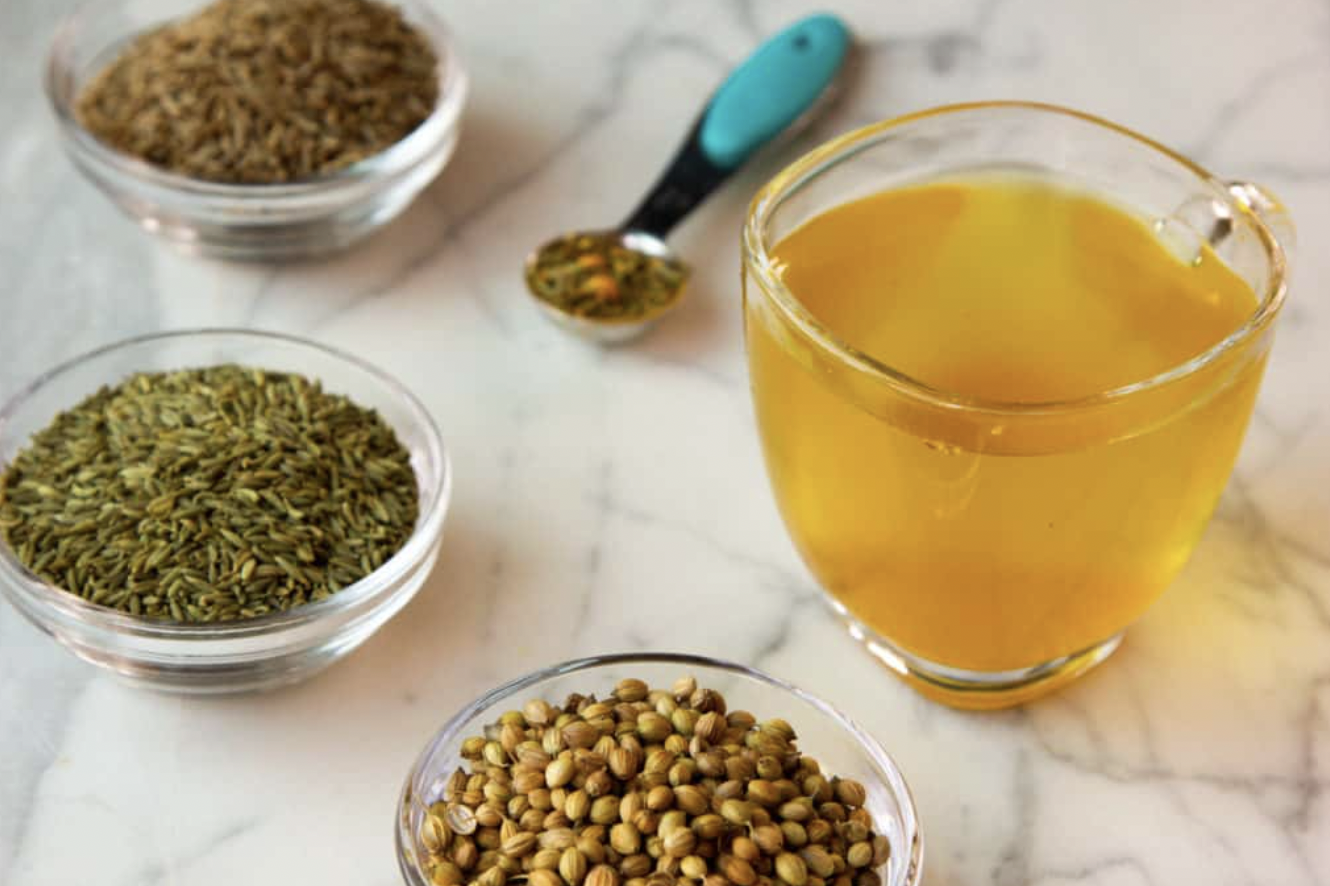
Ingredients:
½ teaspoon cumin seeds
½ teaspoon coriander seeds
½ teaspoon fennel seeds
4–5 cups water
Instructions:
Heat the water in a stainless steel pot over high heat. Add the seeds. Allow the tea to boil for 5 to 10 minutes, depending on the preferred strength. Strain out the seeds, place in an insulated thermos, and sip throughout the day.
Benefits of Coriander
Improves digestion
Relieves gas
Helps with many pitta disorders, especially urinary or digestive
Increases digestion and absorption
Treats intestinal disorders
Aids indigestion
Calms muscle spasms
Reduces inflammation—even shown to help with rheumatoid arthritis
Benefits of Cumin
Stimulates agni (digestive fire)
Decreases gas
Helps with indigestion
Flushes out ama (toxic waste)
Relieves congestion
Contains antioxidants and iron
Soothes inflamed mucous membranes
Improves elimination
According to Ayurveda, cumin is pacifying to both vata dosha (air and ether qualities) and kapha dosha (water and earth). Due to its slightly heating nature, pittas (fire and water) may find that, in excess, cumin will increase the fire element. However, the coriander and fennel work to balance the heat.
Benefits of Fennel
One of the best herbs for strengthening agni (digestive fire) without aggravating pitta
Stops cramping
Increases mental alertness
Promotes breast milk flow
Helps with IBS
Relaxes the digestive tract
Alleviates gas and indigestion
Increases the burning of fat
Moves lymph
Stewed Breakfast Apples
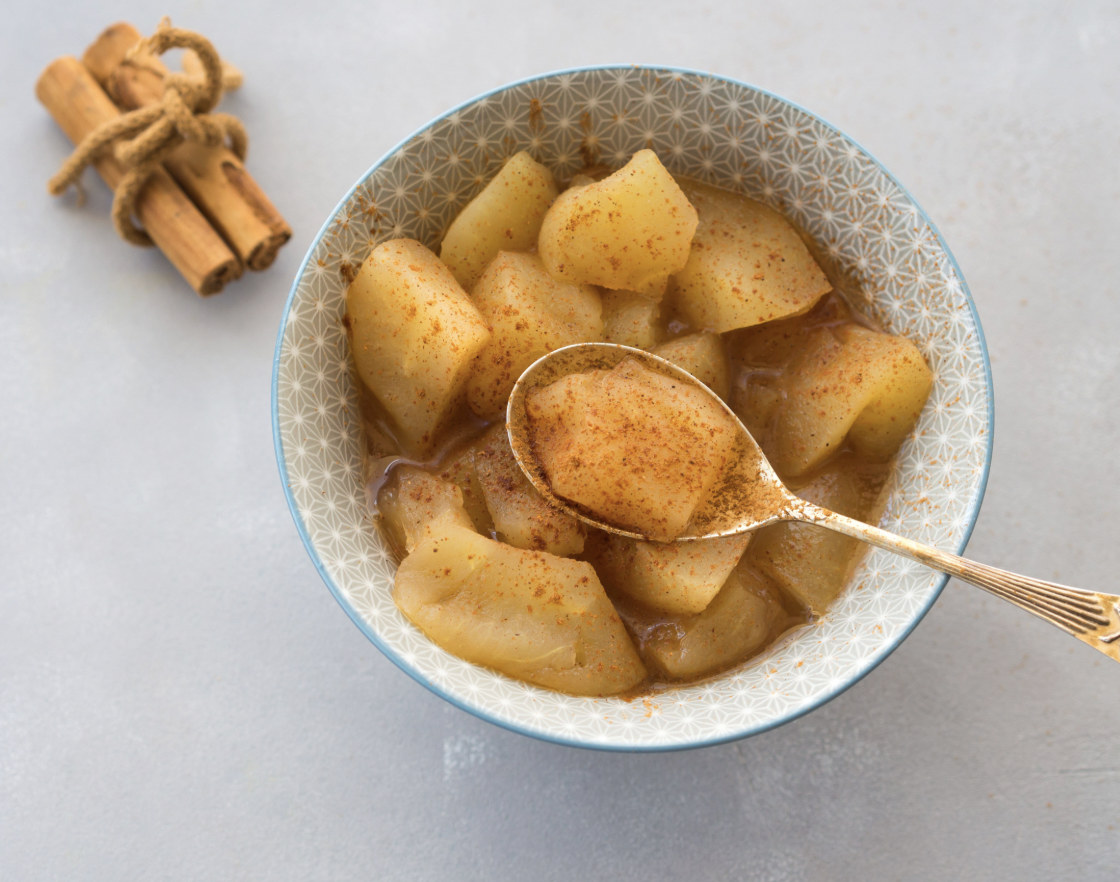
Ingredients:
1 cup of water
1 medium size organic apple, cubed
Optional:
2 dates (or 1 small handful raisins or another dried fruit of choice)
1 tbsp grated fresh ginger
½ tsp cinnamon
½ tsp cardamom
¼ tsp dry ginger
1 tsp ghee (clarified butter)
1 little drizzle of maple syrup
1 pinch nutmeg
Instructions:
Wash, core, peel and cut the apple. If you don’t have time to peel, at least wash, cut and core the fruit into cubes. Make sure to remove the seeds as these are poisonous!
Combine water, apple, dates and all spices in small pan, bring to a boil, and then turn down heat to medium-low for 5 minutes. Apple should be soft and somewhat translucent. Different types of apples take different amounts of time to cook, so check often.
Once the apples are done, add 1 tsp of ghee. (At this stage, you can also add a little drizzle of maple syrup or a pinch of nutmeg)
Cool, bless and enjoy! Don’t be afraid to drink the “apple juice” left in the pan afterwards; it’s filled with amazing digestive spices.
Note: This recipe can also be done with pears. It'll require more water and time, but another delicious alternative!
Stewed apples are not only hearty, comforting and delicious, but they aid digestion. Apples on their own contain useful health benefits. When stewed with warming spices, this powerful fruit comes to life. In fact according to Ayurvedic thought, Stewed Apples are a tridoshic dish, meaning it serves the qualities of Vata, Kapha and Pitta, as well as all types of digestion.
Types of Digestion According to Ayurveda:
Balanced digestion (sama agni): Digestion is strong as you eat balanced quantities of food at regular intervals. This consistency and attention to serving size helps build balanced tissues (dhatus).
Variable digestion (vishama agni): Digestion varies- sometimes it is sluggish and other times is is strong. This agni causes variable states in tissue (dhatu). This type typically occurs for people with Vata tendencies.
Slow digestion (manda agni): Food is not digested efficiently, even in moderate quantities. Due to the slow quality, the tissues (dhatus) formed are low in quality and higher in quantity. This type typically occurs for people with Kapha tendencies.
Sharp digestion (tiksna agni): Food is digested quickly in large quantities and/or if eaten frequently. If food is consumed in smaller quantities, the digestive tract becomes irritated and burns tissues (dhatus). This type typically occurs for people with Pitta tendencies.
Stewed Apples is the perfect meal for the morning because its qualities regulate vishama agni, kindle manda agni and slow tiksna agni! It really is the perfect food to break fast in the morning.
Kitchari
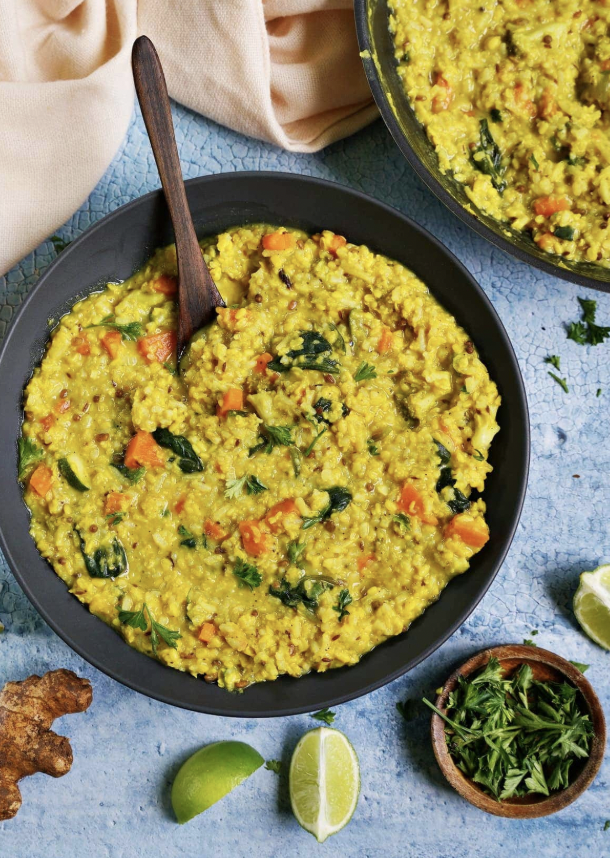
Kitchari, traditionally made of yellow mung dal beans and basmati rice, along with digestive spices and ghee, is considered a cleansing and detoxifying food in Ayurveda. There is plenty of Ayurvedic wisdom to support kitchari’s healing properties. In Ayurveda, sound digestion is paramount to health and wellness. If we’re not digesting, assimilating, and eliminating our food properly, disease can set in.
Kitchari is offered as a mono-nutrient fast in Ayurveda, giving our digestive system a much-needed break from having to process all different kinds of food day in and day out. It’s considered cleansing in the sense that it allows the digestive system to rest, and it’s also nutritious and easily assimilated by the tissues. Mung dal beans are high in protein and carbohydrates, offering satiety and energy. Protein is important for keeping the blood sugar, and therefore the mood, stable. Basmati rice is easy to digest, and the spice "churna," or mixture, sparks our agni, or digestive fire. The ghee (or oil) lubricates the system and further aids in digestion. You can add seasonal vegetables to the recipe for variety and to boost the vitamin and mineral content of the dish.
Ingredients:
2 cups yellow mung dal beans
2 tablespoons ghee or organic sesame oil
2 teaspoons each black mustard seeds, cumin seeds, turmeric powder, and black pepper
2 bay leaves
1 teaspoon each cumin powder, coriander powder, fennel seeds, fenugreek seeds (cinnamon optional in winter)
1 cup white basmati rice
3 green cardamom pods (optional)
2 cloves (optional)
2–5 cups of chopped, organic, seasonal vegetables such as spinach, carrots, celery, kale, and bok choy (avoid nightshades)
1 cup chopped fresh cilantro (optional)
Instructions:
Rinse the mung dal beans and strain them five times, or until the water runs clear. Heat the ghee or oil in a large pot. Add all the seeds and toast until the mustard seeds pop. Add the bay leaves and powdered spices, and mix together. Stir in the rice and beans. Add eight cups of water, cardamom pods, cloves, and chopped vegetables. Bring to a boil and reduce to a simmer. Cook at least one hour, or until the beans and rice are soft and the kitchari has a porridge-like consistency. Serve warm with fresh cilantro on top, if desired.
Variations
Tweak the recipe according to your dosha, or to make it gluten or dairy free.
Kapha
Omit the ghee or oil, and instead soften the spices by cooking in two inches of water before adding the rice and dal.
Use quinoa, millet, or amaranth instead of rice.
Add about ½ inch of chopped, fresh ginger to the oil when cooking the spices.
Add a pinch of cayenne while cooking.
Use half the amount of ghee or oil.
Best veggies for a kapha variation are leafy greens, Brussels sprouts, cauliflower, asparagus, and celery.
Vata
Use twice the amount of ghee or oil.
Add a pinch of cayenne while cooking.
Add about ½ inch of chopped fresh ginger to the oil when cooking the spices.
Use quinoa instead of rice to increase the protein content.
Use double the amount of rice.
Best veggies for a vata variation are carrots, zucchini, peas, sweet potatoes, and asparagus.
Pitta
Use half the amount of mustard seeds and black pepper, or omit mustard seeds altogether.
Replace ghee with coconut oil.
Best veggies for a pitta variation are leafy greens, broccoli, cauliflower, asparagus, zucchini, and carrots.